Founder's launch — flagship done-for-you builds & migrations up to 35% off. Ends July 5.
Human Design Chart Widget cover
Widget

Human Design Chart Widget

Human Design synthesises astrology, the I Ching, Kabbalah and the chakra system into a single bodygraph calculated from your bi. Embeddable domain-locked widget, mobile-responsive.

Description

About This Widget

Human Design Chart - Types, Authorities, Profiles and Centers Explained

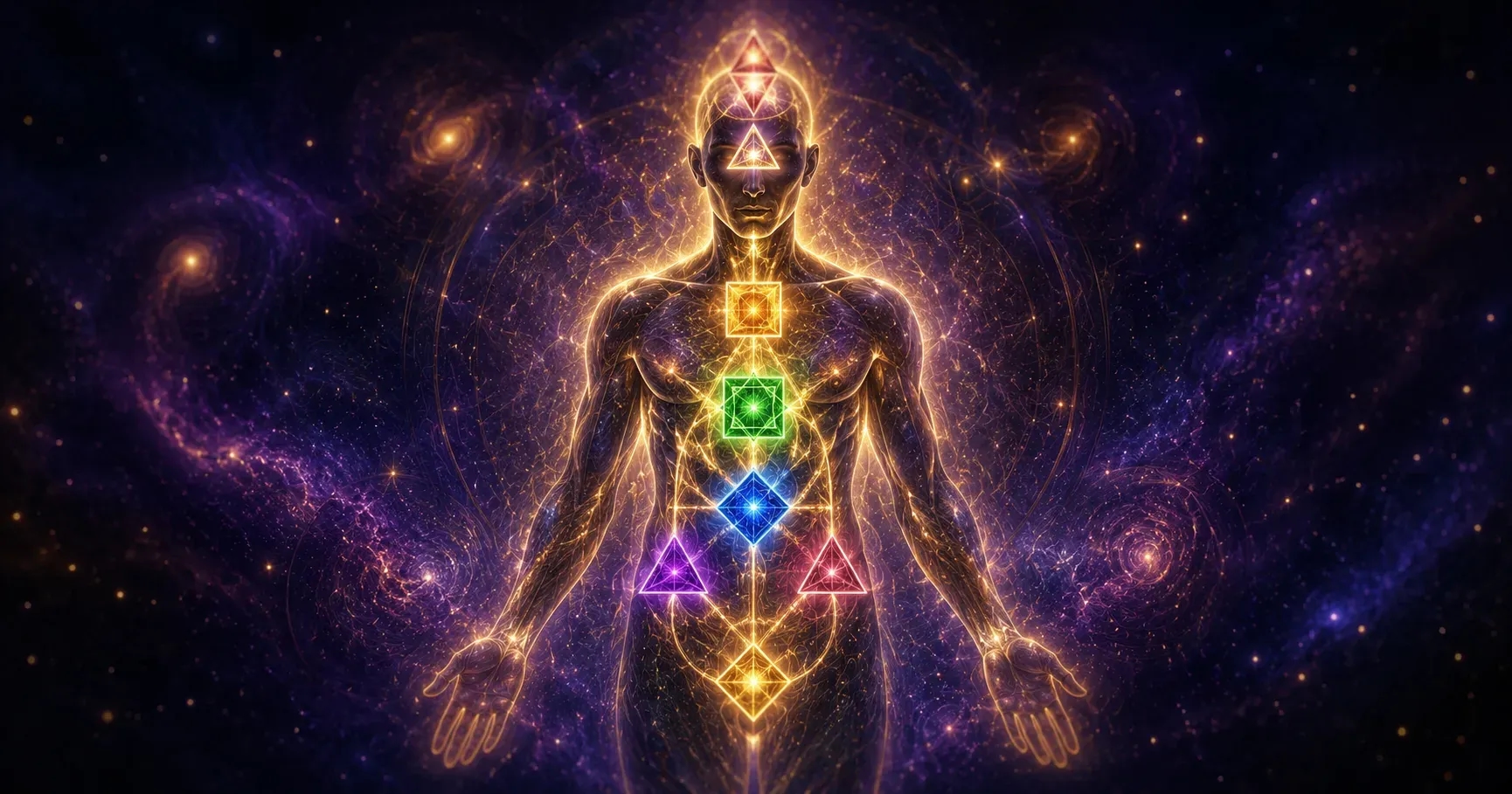
Human Design is a synthesis. It pulls from western astrology, the I Ching, the Kabbalistic Tree of Life and the Hindu-Brahmin chakra model, then runs them through the precise coordinates of your birth moment - date, time, location - to produce a bodygraph. Not a generic personality type. A specific map of how your energy moves, where it is consistent and where it is designed to take in and amplify what surrounds you.

The system was formalized by Ra Uru Hu in 1987. What the system produced is a framework that has proven useful to a large number of people trying to understand why certain strategies exhaust them while others feel effortless.

The Five Types

Every person in Human Design belongs to one of five Types. Your Type determines your strategy - the specific way to move through the world with the least friction.

Generators (~37%) carry renewable sacral energy. Their strategy is to wait to respond: not passive waiting, but a receptive readiness for something in the environment to trigger a gut response. When Generators initiate from their mind rather than from that gut signal, frustration builds. When they respond correctly, work feels like fuel.

Manifesting Generators (~33%) are a hybrid - sacral energy plus a direct connection to the Throat. Built for multiple simultaneous tracks, they move fast and often skip steps. Their strategy is to wait to respond, then inform the people affected before acting. Both frustration and anger are signals that the design is running incorrectly.

Manifestors (~9%) are the only Type with true initiating energy. Their strategy is to inform the people in their field before they move - not to ask permission, but to dissolve the resistance that forms when others feel blindsided. Anger is the not-self signal.

Projectors (~21%) have a focused, penetrating aura designed to read and guide others. Their strategy is to wait for the invitation - personal, direct recognition that they specifically are the right person for this role or conversation. Bitterness is the not-self signal; success is the signature.

Reflectors (~1%) have no consistently defined centers. They are designed to sample and reflect the health of the communities around them. The strategy is to wait a full lunar cycle - 28 days - before making significant decisions.

The Nine Centers

The bodygraph contains nine energy centers. Each can be defined (colored in) or undefined (white).

A defined center operates consistently. It runs with a fixed character that you can rely on and that others feel as a stable field around you.

An undefined center is open. It takes in and amplifies the energy of the defined centers of people nearby. This is where conditioning happens - where the patterns installed by family, culture and close relationships leave the deepest marks. It is also where wisdom develops over time, because the undefined person experiences the full range of how each energy can manifest.

The nine centers are: Head (mental pressure, inspiration), Ajna (conceptualization and certainty), Throat (communication and action), G Center (identity, love, direction), Heart/Will (willpower and desire), Sacral (life force and reproductive energy), Solar Plexus (emotions and the wave), Spleen (intuition and survival), Root (pressure and adrenaline).

The Twelve Profiles

Your Profile comes from the two lines of your conscious and unconscious Sun gate positions in the 64-hexagram I Ching wheel. There are 12 possible profiles, each describing the role you came to play and the way others experience you.

The six lines carry their own quality: Line 1 investigates and needs foundation. Line 2 is the natural hermit with gifts others see before they do. Line 3 learns through trial and error. Line 4 operates through close, fixed relationships. Line 5 is projected upon as the practical solution provider. Line 6 lives in three phases and becomes the role model.

Inner Authority

Strategy tells you how to move. Authority tells you how to decide. The most common authorities are:

Emotional: wait for emotional clarity over time - no truth in the immediate reaction. Sacral: in-the-moment gut response, sound and physical sensation. Splenic: quiet, instantaneous intuition that does not repeat. Ego: genuine personal desire, what the will actually wants. Self-Projected: speaking it out loud to hear where the truth lands in your own words. Mental (Outer): no inner authority - the right environment and the right conversations provide the signal. Lunar: for Reflectors only - a full 28-day cycle before committing.

How to Use This Widget

Enter your birth date, time (as precise as possible) and location. The widget calculates your bodygraph using standard ephemeris data and returns your Type, Strategy, Authority, Profile and a reading of each center.

The reading is most useful when you focus on one element at a time. Start with your Type and Strategy - that is the most immediately actionable layer. Notice over the next few days what happens when you follow the strategy versus when you ignore it. The body tends to give clear feedback faster than the mind expects.

From there, your Authority tells you which signal to trust when decisions matter. Your Profile frames the broader context of what this life is about. The centers tell you where your energy is consistent and where you are designed to remain open and adaptable.

Human Design is not a fixed verdict on who you are. It is a map of how your energy is designed to move. What you do with the map is yours to discover.

Delivery & License

Secure domain-locked iframe - renders only on your licensed URL. One-line embed, issued immediately after purchase. Mobile-responsive, dark/light via CSS variables. English language.

Delivery

iFrame Embed

License

Single Domain

Domains

1

astrologyhuman-design

Live Preview

Integration Options

Theme:

Showing the Dark preset — the highlighted theme value below and the live preview above update with your choice.

Copy and paste into any HTML page, WordPress block editor (HTML block), or website builder. Replace YOUR_API_KEY with your key from the dashboard.

<!-- EsoTier Widget: Human Design Chart Widget -->
<iframe
  src="https://esotier.com/widgets/human-design?key=YOUR_API_KEY&theme=dark"
  width="400"
  height="500"
  frameborder="0"
  loading="lazy"
  title="Human Design Chart Widget"
></iframe>

Sign up free to get your API key and replace YOUR_API_KEY.

About this widget

Human Design Chart Calculator - Type, Strategy, Authority & Profile

Human Design synthesizes astrology, the I Ching, the Kabbalistic Tree of Life and the chakra system into a single bodygraph calculated from your exact birth date, time and place - revealing your energetic Type, Strategy, inner Authority and Profile.

What is Human Design

Human Design is a modern self-knowledge system that synthesizes astrology, the I Ching, the Kabbalistic Tree of Life and the chakra system into a single bodygraph calculated from your exact birth date, time and place. The result is a personal energy map built from planetary positions at two moments - the moment of your birth and roughly 88 days before it.

Nine centers, connected by 36 channels and 64 gates (mapped one-to-one to the I Ching hexagrams), form your bodygraph. Centers you were born with consistent access to appear defined; the rest stay open, absorbing and amplifying the energy of the people around you.

Your Type and Strategy describe how you are built to engage with life and take right action, while your inner Authority is the reliable decision-making center your body uses to sort a true yes from a true no.

Type, Strategy and Inner Authority: The Core of Your Design

Of the five energy types - Generator, Manifesting Generator, Projector, Manifestor and Reflector - each carries its own Strategy for engaging the world without forcing outcomes or draining its own energy.

Inner Authority sits beneath Type and Strategy as the actual decision-making mechanism: a Sacral response, an emotional wave, gut instinct or another center-specific process that consistently produces correct choices when followed.

How it works

  1. 1Enter your exact birth date, time and place of birth - Human Design needs a precise birth time to calculate the two charts (personality and design) that build your bodygraph.
  2. 2Read your Type and Strategy first - they describe how you are built to act and where your energy naturally flows without resistance.
  3. 3Check your inner Authority - the decision-making center your body relies on for major choices, more reliable than the mind alone.
  4. 4Consult the in-depth aspects (below) to interpret your Profile, Centers, Channels, Gates and Definition.
In-depth guide

Explore every aspect in depth

Every reading this widget produces, explained — select a topic to go deeper.

In-depth guide

What Is a Human Design Reading?

A human design reading is a map drawn from the exact moment of your birth. It uses the date, time and geographic location to calculate where the planets and the Moon's nodes were positioned in the 64-gate wheel — a system that overlays the I Ching hexagrams onto the zodiac and the Kabbalah Tree of Life. The result is your bodygraph: a nine-center diagram that shows which of your energy centers are consistently activated (colored in) and which are open to outside influence (white).

The reading has two layers. Your Conscious Design — the black line in the bodygraph — comes from the planetary positions at the exact moment of birth: what you know yourself to be, how you think about your own traits, what feels familiar. Your Unconscious Design — the red line — comes from positions 88 degrees of solar arc before your birth, roughly 88 days earlier, which the system calls your 'design' calculation. This layer represents the qualities others see in you more clearly than you see yourself.

Where the planets activate specific gates in both layers, you get defined channels. Where a channel connects two centers and carries energy between them, both centers become defined. The pattern of which centers are defined and which are open gives you your type, determines your strategy, reveals your authority, and begins to show your profile — the four major pillars of a human design reading.

To calculate your human design chart accurately you need your birth date, your birth time to the nearest minute, and your birth location. A difference of even 10 minutes in birth time can change which gates are active and in some cases shift the type or authority. If you were born in a hospital, your birth certificate time is usually sufficient. If you are uncertain about your time, an experienced reader can sometimes narrow it through a process called rectification.

The system was synthesized by Ra Uru Hu in 1987 in Ibiza and draws from four traditions: the I Ching (the Chinese Book of Changes, with its 64 hexagrams mapped onto the gate wheel), the Kabbalah (the Tree of Life mapped onto the bodygraph circuit), the Hindu chakra system (from which the nine centers derive their biological correspondences), and Western astrology (the planets and their positions at birth and design). Human Design is not a direct descendant of any one of these systems but a synthesis that uses all four as its structural scaffolding.

What you do with a reading is more important than the reading itself. The system has genuine practical utility — understanding your type and strategy alone can shift how you make decisions, where you direct energy, and how you navigate relationships. But the deepest value emerges over time, from living the experiment of your design rather than just knowing it intellectually. A reading is the beginning of that experiment, not the end.

The Five Human Design Types

Human Design divides all people into five types based on how their energy functions and how they are designed to interact with the world. The types are determined entirely by which energy centers in your bodygraph are defined and how they are connected — specifically which motors are linked to the Throat Center. This is not astrology and it is not personality typing: it comes directly from your bodygraph geometry.

Generators make up roughly 35 to 40 percent of the population. They have a defined Sacral Center and a defined Throat that is not directly connected to a motor via a channel. Their life energy is renewable, designed for sustained engagement, and operates through a response mechanism rather than through initiation. Generators find their path by responding to what life presents rather than by pursuing goals their minds construct.

Manifesting Generators are a subtype of Generator — they also have a defined Sacral, but they additionally have a direct channel from a motor to the Throat. This gives them both the generative life-force and the manifesting capacity to act quickly once the sacral response has committed. They are built for multiple simultaneous tracks and naturally skip steps that linear types find essential.

Manifestors account for roughly eight to nine percent of the population. They have a motor directly connected to the Throat but no defined Sacral. They are the only type genuinely designed to initiate without waiting for a signal. Their strategy is to inform the people who will be impacted by their actions before moving — not to ask permission, but to reduce the resistance that their powerful, closed aura naturally generates in others.

Projectors make up roughly 20 percent of the population. They have no defined Sacral and no direct motor-to-Throat channel. They are designed to guide and direct energy rather than generate it, and their focused, penetrating aura allows them to see systems and people with unusual depth. Their strategy is to wait for invitation and recognition before offering guidance.

Reflectors are the rarest type at roughly one percent. They have no defined centers at all — their entire bodygraph is open and white. They are designed to sample and mirror the energy of their communities, and their authority unfolds over a full lunar cycle of roughly 28 days.

Understanding your type is the first and most practically useful step in a human design reading. Knowing that you are a Generator changes how you approach work — less planning, more responding. Knowing that you are a Projector changes how you offer guidance — less doing, more waiting for the right invitation. Each type carries a specific conditioning pressure that works against its natural design, and recognizing that pressure is the beginning of living with more ease.

Human Design Strategy — The Right Timing for Action

Your strategy in Human Design is the behavioral guidance that emerges from your type. It is the answer to the question of when and how to act — not the what, but the mechanics of right timing and right initiation. Following your strategy does not require belief or mental discipline: it is a matter of aligning your physical behavior with your energetic design, and the results tend to be concrete and measurable over time.

For Generators and Manifesting Generators, the strategy is to wait to respond. This does not mean passive waiting or inaction. It means not initiating from a mental desire or a logical plan, but instead moving when something in the environment triggers that gut-level sacral response — the sound or feeling that rises from the belly before the mind has made a case. When the response is there, moving is correct. When it is not, waiting preserves energy and prevents the frustration of investing in the wrong direction.

For Manifestors, the strategy is to inform. Before taking significant action — starting a project, making a change, moving into a new space — informing the people who will be affected dissolves the resistance that a Manifestor's closed aura naturally creates. This is not asking permission. It is a courtesy that keeps the path clear.

For Projectors, the strategy is to wait for the invitation. Specifically, waiting for the recognition that says the right person has seen them and is inviting their guidance into a significant area of life — work, relationships, direction. Offering guidance before the invitation tends to produce bitterness, because without the invitation, even excellent guidance is not received.

For Reflectors, the strategy is to wait a lunar cycle before making major decisions. The moon activates each of the 64 gates over the course of roughly 28 days, and experiencing the decision from each of those energetic vantage points gives the Reflector an informed, whole-cycle perspective that a shorter window cannot provide.

Strategy is not about the mind making better decisions — it is about removing the mind from the decision-making process for certain kinds of choices. The mind is designed for communication and reflection, not for determining the direction of your life. Strategy is the corrective that returns decision-making authority to the body-based or aura-based signal that is actually designed for that job. The mind can narrate the journey; it does not choose the destination.

Most people find that strategy is simple to understand and genuinely difficult to practice, because it runs directly against cultural conditioning. Generators are told to pursue goals, not wait. Projectors are told to put themselves out there, not wait for invitation. Working with strategy is an experiment with real feedback: the frustration, bitterness, anger and disappointment that appear when you operate against your strategy are reliable signals that you have gone off course.

Human Design Authority — Your Inner Decision-Making Signal

Authority in Human Design is the specific internal signal you are designed to use when making decisions. It is not the mind, logic, or consensus with others — it is a body-based or aura-based signal that has a consistency and reliability that your mind alone does not. There are seven authorities, and each is determined by your bodygraph: specifically, by which centers are defined and how they are connected.

Emotional or Solar Plexus Authority belongs to anyone with a defined Solar Plexus, regardless of type. It is the most common authority. The signal is the clarity that emerges after the emotional wave has moved through — not the peak of excitement and not the depth of the low, but the other side of the arc. The practice is patience: sleep on it, wait for the wave, and move when there is relative calm and clarity.

Sacral Authority belongs to Generators and Manifesting Generators who have a defined Sacral but no defined Solar Plexus. The signal is the immediate gut response — the sound or feeling that arises in the body before the mind engages. Yes is a full, warm, expansive feeling. No is a flat, tight, contracted one. This signal is immediate, not waiting.

Splenic Authority belongs to people with a defined Spleen but no defined Solar Plexus and no direct Sacral-to-Throat channel. The splenic signal is quiet, instantaneous and speaks once. It is a survival-oriented knowing: physically safe or unsafe, aligned or not, in the moment. The challenge is that it does not repeat, so the practice is learning to catch and honor the first whisper.

Ego Projected and Self-Projected Authorities belong to specific Projector configurations. Ego Projected authority lives in what you genuinely want at the level of will and commitment. Self-Projected authority is found by speaking aloud — the truth is in the quality of your own voice, which becomes clear when you use a trusted person as a sounding board rather than an advisor.

Mental or Outer Authority belongs to Projectors with no defined motors. The clarity comes through moving between different environments and conversations and noticing what remains stable across them all.

The reason Human Design focuses on authority rather than on analysis is that the mind is not designed to decide the direction of a life — only to reflect on it afterward. The mind is an extraordinary tool for communication, creativity and learning. It is a poor tool for choice, because it can rationalize any direction equally. Authority gives you a signal that predates rationalization — something the body or the aura knows before the mind has had time to make a case for or against.

Human Design Profile — Your Role in the World

Your profile in Human Design describes the costume you wear in this life — the role you are here to play, the themes that run through your biography, and the way you are seen by others. It is expressed as two numbers, such as 1/3 or 4/6, derived from the lines of the hexagram that your Conscious Sun gate and your Unconscious Sun gate occupy in the I Ching.

The six lines of the I Ching hexagram each carry a distinct archetype. Line 1 is the Investigator: foundation-building, research-oriented, needing to know before stepping forward. Line 2 is the Hermit: naturally talented, needing solitude, called out by others who see the gift. Line 3 is the Martyr: learning through trial, error and bonds that form and break. Line 4 is the Opportunist: community-dependent, influential through networks, needing stability to operate. Line 5 is the Heretic: carries a field of expectation from others, here to deliver practical solutions. Line 6 is the Role Model: lives in three phases across the lifetime, moving from trial and error through withdrawal to the mature expression of living example.

The first number in your profile comes from your Conscious Sun — the line of the hexagram occupied by the Sun at the moment you were born. This is the line you can feel and describe in yourself. The second number comes from your Unconscious Sun (the design calculation, 88 days earlier). This is the line others often see in you more clearly than you see it yourself.

Your profile affects how you learn, how you relate to others, and what themes repeat across your biography. A 1/3 person will experience more trial, error and foundation-building than a 2/5 person will. A 4/6 will move through the three phases of the sixth line while also relying heavily on their personal network. Reading your profile alongside your type and authority gives you the most useful picture of how your design actually operates in daily life.

One of the most validating things about the profile is recognizing recurring themes in your life story that previously seemed random. The 3 line's pattern of bonds that form and break looks like a series of failures until you understand it as a design for learning through direct contact with what does not work. The 5 line's experience of carrying the projections and expectations of others looks like a burden until you see it as the specific way that line's practical solutions reach the people who need them.

How to read your own profile: look at the two numbers together rather than separately. The 12 profiles in Human Design combine two of the six lines, and the combination has a quality of its own. A 1/3 is very different from a 3/1 — the conscious line is experienced differently from the unconscious one, and the order matters. Your human design chart will show your profile in the calculation panel.

The Nine Centers of the Human Bodygraph

The human design bodygraph is built around nine energy centers, each of which corresponds to a cluster of biological functions, psychological themes, and energetic qualities. These centers evolved from the seven chakras of the Hindu system but are nine rather than seven — two centers split in the late 20th century, according to the original transmission of Human Design. Each center can be either defined (colored in) or undefined (white) in your chart.

A defined center means you generate a consistent, reliable energy in that domain. People around you experience this energy as a stable field — they can feel it, be influenced by it, and in some cases borrow or amplify it. Your defined centers are your consistent qualities, the reliable aspects of who you are.

An undefined center means you take in and amplify energy from others in that domain. This makes you sensitive and perceptive in that area — you experience a wider range of energies there than defined types do — but it also means you are susceptible to being conditioned by other people's consistent energy. Over time, undefined centers can become sources of wisdom precisely because of the variety of energies you have sampled and learned to recognize.

The nine centers are: Head (mental pressure and inspiration), Ajna (conceptualization and certainty), Throat (manifestation and communication), G-Center (identity, direction and love), Heart/Ego (willpower and tribal drive), Sacral (life-force and sexuality), Spleen (intuition and survival), Solar Plexus (emotion and spirit), and Root (pressure and stress). Your bodygraph, calculated from your birth ephemeris, will show your specific pattern of definition — which is yours alone.

The pattern of defined and undefined centers across the bodygraph determines your type and creates the basic geometry of your design. Looking at your nine centers is the fastest way to understand where you are consistent and where you are not — where you generate and where you receive. It also shows you which areas of life are most likely to be sites of conditioning, because the undefined centers are where other people's consistent energy has the most impact on you.

Practically: to read your own centers, start with the basics — which centers are colored in your bodygraph and which are white. Then read about each defined center to understand what is consistently yours, and each undefined center to understand where you are sensitive and where the conditioning typically operates. This takes the map from abstract to directly applicable to your daily experience.

Channels in Human Design — Fixed Personality Traits

Channels are the connections between two adjacent energy centers in the bodygraph. There are 36 channels in the Human Design system, each formed by two gates — one from each center at either end. When both gates of a channel are activated — either from your Conscious (birth) calculation or your Unconscious (design) calculation or both — the channel is defined. A defined channel connects its two centers and transfers energy between them, making both centers defined as well.

Your defined channels represent the most consistent and reliable aspects of your personality and energy. They are the traits that are always switched on — not dependent on who you are with or what environment you are in. When someone who knows you well describes you, they are often unconsciously describing your defined channels: the quality that is always there, the energy that is always available, the way you always seem to be.

Each channel has a name and a theme in Human Design. Some examples: the Channel of Discovery (2-14) connects the G-Center to the Sacral and describes someone who finds their purpose through doing, following their sacral response into work and direction. The Channel of Charisma (34-20) connects the Sacral directly to the Throat — this is the configuration that makes a Manifesting Generator rather than a Generator. The Channel of Judgment (18-58) connects the Spleen to the Root and creates a consistent drive to improve, correct and perfect.

Your specific channels, shown as colored lines connecting centers in your bodygraph, were determined by the positions of the Sun, Moon, and all planets at both the moment of your birth and the moment of your design calculation (88 days before birth). Each planet activates one gate on the wheel, and when two planets from either calculation activate the two gates of the same channel, that channel becomes defined in your design.

Channels can be defined in three ways, depending on which calculation provides the activation. A channel is Conscious when both gates come from your birth calculation — you can feel and describe this quality in yourself. It is Unconscious when both gates come from the design calculation — this is the trait others see clearly but you may be surprised to hear about. It is Mixed when one gate comes from each calculation — these channels can feel partially familiar and partially mysterious. Understanding which layer your channels come from adds another dimension to how you experience and relate to those traits.

The number of defined channels you have ranges considerably between individuals — some people have two or three, others have ten or more. The number is not better or worse; it simply describes how much of your energy field is fixed versus open. More defined channels means more consistent energy in specific domains and less susceptibility to conditioning in those areas. Fewer defined channels means more openness and adaptability, and a potentially wider range of conditioning.

Gates in Human Design — Activated Points on the Wheel

Gates are the 64 points distributed around the Human Design wheel, each corresponding to one of the 64 hexagrams of the I Ching. Every gate belongs to one of the nine centers and carries a specific quality, theme, or energetic flavor. When a planet is positioned at the degree of a gate in your birth ephemeris or in your design ephemeris, that gate is activated in your bodygraph.

You will always have at minimum 26 gates activated — 13 from your Conscious calculation (birth) and 13 from your Unconscious calculation (design). Some people have more, depending on how the planets fell. The activated gates show up as colored in half-channels on your bodygraph diagram. When two activated gates at opposite ends of a channel are both lit up, they connect and form a defined channel.

Gates that are activated but not part of a defined channel are called hanging gates or half-channels. They represent potential: themes and qualities that are latent in you, that express themselves when someone with the complementary gate is in your energy field. You may notice that certain people seem to consistently activate specific talents or energies in you — this is often because their gate completes your hanging gate into a defined channel.

The specific qualities of each gate in Human Design are drawn from the I Ching line-by-line interpretations, filtered through the lens of the chakra system, astrology, quantum physics and the Kabbalah as synthesized in the original Human Design system developed by Ra Uru Hu in 1987. Reading the qualities of your activated gates gives you a fine-grained picture of the specific flavor of your design — more detail than type and authority alone, and a rich personal language for understanding your consistent strengths and recurring themes.

Each gate also has six lines within it, and the specific line activated depends on the exact degree of the planet at the time of calculation. The line adds an additional layer of nuance — Gate 25 line 1 reads differently from Gate 25 line 4, even though both share the same basic gate theme of innocence. This level of detail is generally explored after the foundations of type, strategy, authority and profile are stable.

Reading your gates is where human design chart analysis becomes genuinely personal. Two people with the same type, strategy and authority can have very different gate activations and therefore very different expressions of those shared structures. The gates are the fine-grain that makes your chart specifically yours rather than yours-and-forty-percent-of-the-population's.

Definition in Human Design — How Your Energy Holds Together

Definition in Human Design refers to how the defined centers in your bodygraph are connected to each other. It describes the structural shape of your energy field and has a significant impact on how you relate to other people, how you make decisions, and how consistent or variable your inner experience tends to be.

Single Definition means all your defined centers are connected into one continuous circuit. This is the most common definition type — roughly 41 percent of people. Single Definition individuals have a consistent, self-contained energy flow that does not depend on other people to function. They tend to know their own mind and direction clearly. The shadow side is a certain fixed quality — what you are is clear, but you may need to consciously make room for the very different designs of others.

Split Definition means your defined centers fall into two separate, disconnected groups. No defined channel bridges the two groups — there is a gap. Roughly 46 percent of people have Split Definition. The two groups each function consistently internally, but between them there is an openness to outside bridging. People with specific gate activations can temporarily connect your two halves and you may feel more complete or certain in their presence. This is part of why relationships and regular companions matter so much to Split Definition types.

Triple Split Definition has three unconnected groups of defined centers. These individuals need exposure to a variety of people and environments to get consistent bridging of their splits — one person rarely completes all three. They tend to be less influenced by any single person and do best with social variety.

Quadruple Split is rare. All four possible groups are separate. No single person or even pair of people is likely to consistently bridge everything, so these individuals are often best served by community rather than a single primary relationship for energetic completeness.

Definition also affects how you experience time. Single Definition types tend to be more self-referencing — they can move at their own pace, in their own bubble, and their energy does not fluctuate dramatically based on who is around them. Split and Triple Split types tend to be more interpersonally oriented — their inner experience shifts noticeably depending on who they are with, and they may find that they only feel complete or clear in certain company. Neither is better; each creates a different relationship with solitude, companionship and decision-making.

How to read your own definition: look at your bodygraph and count how many separate groups of connected centers you have. If all defined centers connect to each other in one circuit, you are Single Definition. If there are two distinct islands of defined centers that do not connect, you are Split Definition. The color-coding in the bodygraph diagram makes this straightforward to see at a glance.

The Incarnation Cross — Your Life's Purpose Theme

The Incarnation Cross is the broadest statement of purpose in a human design reading. It is formed by the four gates of your Conscious and Unconscious Sun and Earth positions — the four most powerful activations in your bodygraph. The Sun activates a gate in the Conscious calculation (birth) and a gate in the Unconscious calculation (design). The Earth, always directly opposite the Sun, activates the gates 180 degrees away on the wheel. These four gates form a cross.

There are 192 possible Incarnation Crosses in Human Design, organized into four families: the Right Angle Crosses (personal karma and the life lived inward), the Left Angle Crosses (transpersonal destiny and themes that unfold through relationship and community), and the Juxtaposition Cross (a single fixed path, not personal or transpersonal but its own thing). Most people have a Right Angle or Left Angle Cross.

The name of your Incarnation Cross is drawn from the names of its two primary gates — the Conscious Sun and the Conscious Earth. For example, the Cross of the Sleeping Phoenix combines Gate 55 (Spirit/Freedom) and Gate 59 (Sexuality/Bonding). Someone born with this cross is often navigating the tension between emotional freedom and intimate connection as their central life theme.

The Incarnation Cross is not a destiny that arrives fully formed. It typically becomes more legible in the second half of life, after the Saturn Return (around age 29-30) and increasingly through the Chiron Return (around 50). The first three decades are often preparation — gathering experience and definition — before the cross's theme comes into focus as something you recognize as the thread running through everything.

The distinction between Right Angle and Left Angle Crosses has a practical dimension. Right Angle Cross types are oriented primarily toward their own personal evolution — their life is their own karma to work through, and they tend to find that trying to orient their life around serving others (before that karma is worked through) creates confusion. Left Angle Cross types have a more transpersonal orientation — their purpose unfolds through the specific people and encounters that life brings to them, and trying to isolate themselves from that relational field cuts them off from the very current that carries their purpose.

How to read your Incarnation Cross: find the gate numbers of your Conscious Sun, Conscious Earth, Unconscious Sun and Unconscious Earth in your human design chart. The cross is named primarily from the Conscious Sun gate. Reading the themes of all four gates together gives you the most nuanced picture — the cross is not a single quality but a specific tension or interplay between four related themes.

The Not-Self in Human Design — When You're Off Course

The Not-Self in Human Design is the set of behaviors, patterns and inner states that arise when you are operating against your design rather than with it. Each of the five types has a specific Not-Self theme — a kind of emotional signal or behavioral signature that appears when you have been conditioning yourself to function in a way that is not yours.

For Generators, the Not-Self theme is frustration. When a Generator is initiating from the mind rather than responding from the gut, or when they are engaged with work that does not genuinely light up their sacral response, frustration accumulates. It is not a personality trait — it is a reliable feedback signal that something in the current situation is not aligned with the design.

For Manifesting Generators, the Not-Self theme is also frustration, with an additional thread of anger when they feel blocked or unable to act on their multi-directional energy. Like Generators, they are designed to respond first.

For Manifestors, the Not-Self theme is anger. When Manifestors operate without informing — moving into action without telling those who will be affected — they generate resistance. The anger that arises, in themselves and others, is the signal.

For Projectors, the Not-Self theme is bitterness. When Projectors offer guidance, take initiative, or apply energy without being invited or recognized, their wisdom is ignored and their energy depleted. The bitterness that accumulates is the signal that they have been operating without the invitation that makes their guidance receivable.

For Reflectors, the Not-Self theme is disappointment — a deep sense that their environment, community, or the people in it are not living up to their potential. The Reflector's design is to reflect the health of their community back to it; when the community is unhealthy, the Reflector feels it most acutely.

The Not-Self themes are not negative emotions to be avoided — they are information. The Human Design approach is not to suppress frustration or bitterness but to use them as navigational tools. When the signal appears, the question is: where in my life am I operating against my design? What am I initiating that I should be responding to? Where am I offering guidance before being invited? The emotion points toward the misalignment; it does not define the person.

One common misunderstanding: the Not-Self does not disappear entirely when you are living your design. Life is not a constant state of alignment, and the signals will still appear. The difference is in how quickly you recognize them and return to your strategy and authority, rather than spiraling deeper into the pattern that produced them.

The Signature in Human Design — Feeling at Home in Your Design

The Signature in Human Design is the emotional tone or inner state that arises naturally when you are living in alignment with your type and strategy. It is the opposite of the Not-Self theme — where the Not-Self signals that something is off, the Signature signals that things are flowing correctly. Each type has its own Signature.

For Generators and Manifesting Generators, the Signature is satisfaction. Not the fleeting satisfaction of completing a task, but a deeper, quieter sense that the work you are doing and the life you are living are genuinely worth your life-force. Satisfaction in a Generator is not excitement — it is a warm, grounded fullness that builds over time when the sacral response is being honored.

For Manifestors, the Signature is peace. When a Manifestor is informing, moving freely, and not being constantly pulled back by the resistance their closed aura generates, there is a quality of peace — a sense that the space to act is available, that the path is clear, that there is no unnecessary friction in the field.

For Projectors, the Signature is success. Not material success in the conventional sense, though it may include that — rather, a sense of being recognized, of their guidance landing, of being in the right conversations with the right people and being genuinely seen for their depth. Success for a Projector has an interpersonal quality that is central to its meaning.

For Reflectors, the Signature is delight. Not the loud, spike-of-excitement kind of delight, but the sustained, ongoing quality of someone who finds the variety of human experience genuinely interesting, who is surprised and delighted by the range of energies they encounter, and who feels that their environment is worth reflecting.

The Signature is not a goal to achieve — it is a byproduct of living correctly. You do not pursue satisfaction; you follow your sacral response and satisfaction follows. You do not pursue peace; you inform and then act, and peace follows. The relationship is indirect: the strategy and authority are the cause, the Signature is the effect. Trying to feel the Signature directly, without living the strategy, tends to produce a kind of manufactured calm or forced contentment that has a hollow quality distinctly different from the real thing.

One of the most useful applications of the Signature concept is as a retrospective check. After a period of time — a month, a season, a year — you can look back and ask: was the general texture of that period more satisfaction or more frustration? More peace or more anger? That honest assessment tells you more about how closely you are living your design than any single decision or moment can.

Subscribe & embed

Save 17% with annual
$29/mo

Renews each month - cancel anytime.

or own it forever with a one-time purchase

$290

Add-ons